I did not form the habit of reading until after I started to work. Having just committed my first serious job-related mistake and dreaded by the subsequent criticism and self-doubt, I decided to embrace reading as a distraction. I picked from the shelf Crime and Punishment by Fyodor Dostoevsky–a book I purchased in my freshman year of college but had remained buried ever since. It was August 12, 2018, and my reading journey started in the Bluestone Lane Coffee in West Village.
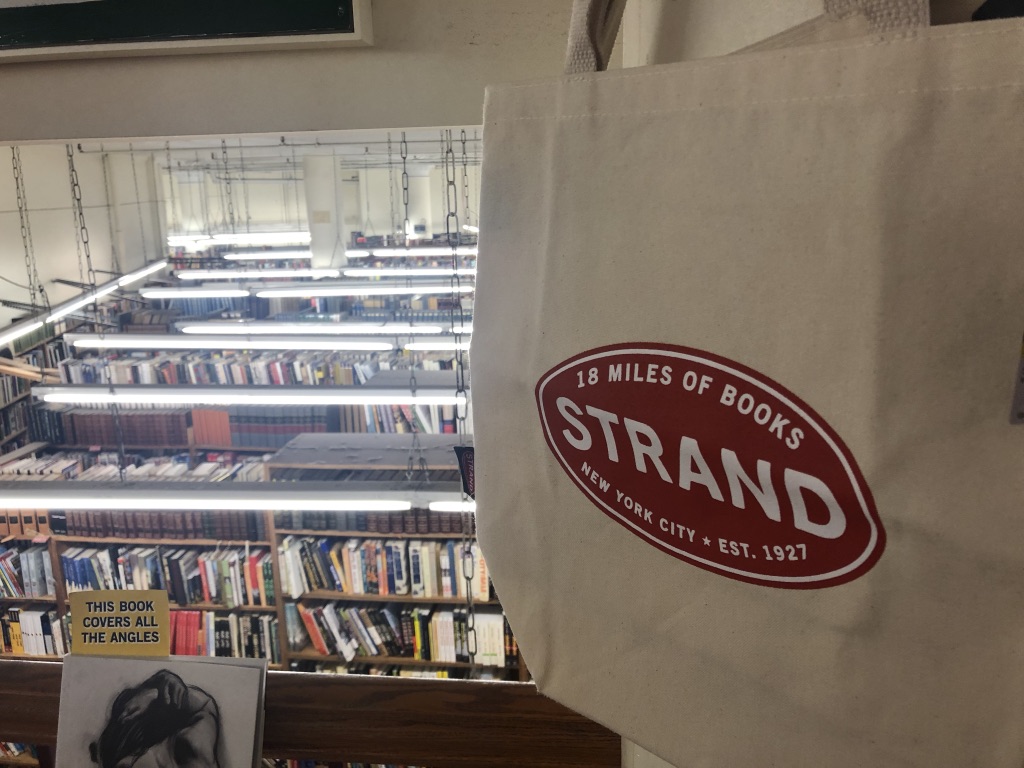
The novel–the very first that I committed myself to since Dickens in high school–took me two month to finish. Eager to find my next target, I dropped by the Strand Bookstore on my way home one night and luckily found The Waves by Virginia Woolf, which I had since considered one of my favorite novels. What’s more, I discovered the secret pleasure of visiting bookstores, especially during the idle hours of 7-9pm on a weekend night, after the closure of the coffee shop in which I studied throughout the day–a habit that would last through the following two years as I lived in the city.
The entrance of the Strand saw a round desk, upon which laid the somewhat intimidating “classics”–from Tolstoy to Joyce, Woolf, and Steinbeck. On my first visit, I decided to look instead for more “relaxing” readings and ended up picking What we talk about when we talk about love by Raymond Carver–digging out from the discount section of the first floor the same Vintage print as the Cathedral I read in high school, with a Strand-style yellow “out of print” tag attached to its back. It was an easy-read. The stories were sufficiently short–or minimalistic–that I could often finish them on my subway ride to work, or during the lunch break. Nevertheless, its depiction of the life of suburban middle-aged middle-class Americans did little to transform my view on love–anyhow, to a much lesser extent than The Revolution of the Heart.
I was driven to visit Strand largely by a vague expectation for serendipity. On a November night, perhaps searching for a psychology textbook, or out of mere curiosity, I for the first time stepped down to the basement of Strand. It was at first blush a considerably less desirable environment than the ground floor–there was no AC, only a few huge noisy fans blowing from the corner of the stacks wind no cooler than the room temperature, which made me wonder whether philosophy and psychology, subjects as important as these, deserved a better treatment by the bookstore. Roaming between the philosophy stacks, my glance was caught by Upheavals of Thought by Martha Nussbaum. Perhaps impressed by its quotation of Proust on the title page, or the apparently huge discount (from $100 to $25, which I soon realized was a brag since the book was available at $20 on Amazon as well), I unprecedentedly purchased this multi-volume book of over 700 pages. On the same day, I also purchased the newly released Identity by Francis Fukuyama, having discovered that it was almost 50% off. I did not know Nussbaum at that time, neither had I learned much about Fukuyama, besides my friend’s recommendations on a few occasions. However, this lack of knowledge and plan was precisely what, by definition, constituted serendipity; the former became my favorite book of all time, with Nussbaum my favorite contemporary philosopher, and the latter had encouraged me to participate in an extremely inspiring and, indeed, still-continuing, conversation on Chinese-American identity with Hui, a close friend of mine.
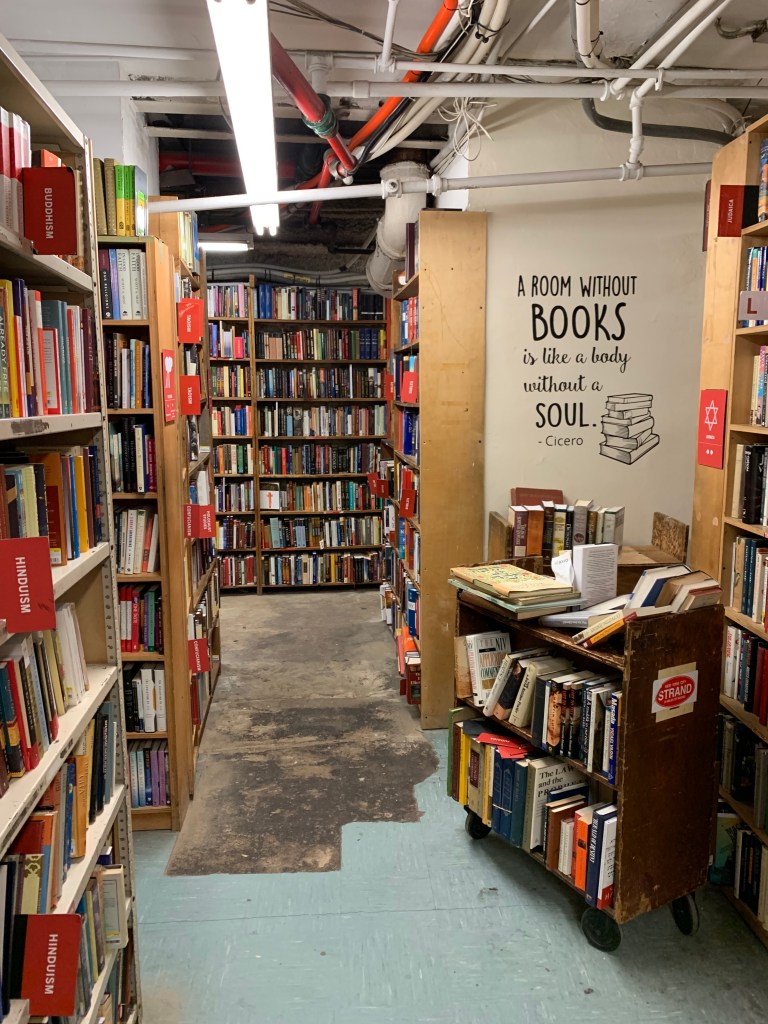
Lingering among the stacks, I often had a mixed feeling–one of pride and humility. I was proud that I seemed to have become what I had always aspired to be–someone who likes to read–despite the fact that by going to the bookstore I was barely “preparing” to read. Each stack seemed to contain hundreds of possible worlds I could delve into and come out of as a better person of some kind. Meanwhile, however, I was reminded, like Socrates, or Jon Snow, of my own ignorance. I was bothered by the realization that a life-long devotion to reading wouldn’t exhaust even one percent of the stacks I was waking under, and how much beauty I must inevitably miss along this journey. No better for the authors–insightful as their ideas might be, most of them would not be communicable beyond the small circle consisting of their family, the publishers, and a few close readers.
The Book Culture on the Upper West Side, another bookstore I have deeply enjoyed over the years, however, used to arouse an entirely different set of feelings. While visiting the Strand often involves a practical mindset, from which I would hold the expectation that I would come out of it with at least some updates on my reading wish list, if not copies of new books, I would visit Book Culture on Columbus in search of pleasures of a very different kind, almost aesthetic. The store, located on 81st and Columbus, unlike its Columbia branch, was surprisingly small, owing less to its limited interior space than how that space was utilized. There was only one stack of fictions (which, unlike the fiction sections of Strand, consisted of authors most of whom I had never heard of), adjacent to a stack of photo albums and architecture portfolios, whose presence seemed to me to serve decoration purposes only. And although the store came with a lower level, it was curiously ‘wasted’ on children books and a kids’ playground (which I was also forbidden to enter as an adult with no kids). Almost equally luxurious was a space at the entrance of the store, which, instead of holding bookshelves, accommodated items that appeared rather uncanny for bookstores–from incense candles to flower pots. This peculiar setup, however, made me want to visit the store all the more. On weekday evenings, on my way home, I would often find myself taking a slight detour off the 79th street station to indulge in the warm glowing light and the mesmerizing incense of the Book Culture on Columbus.
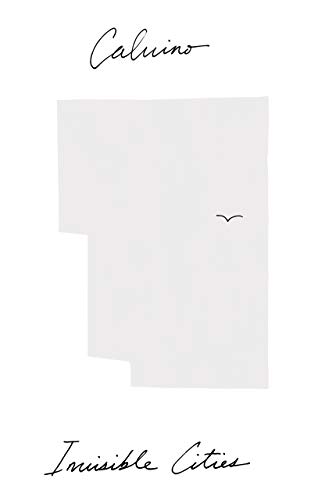
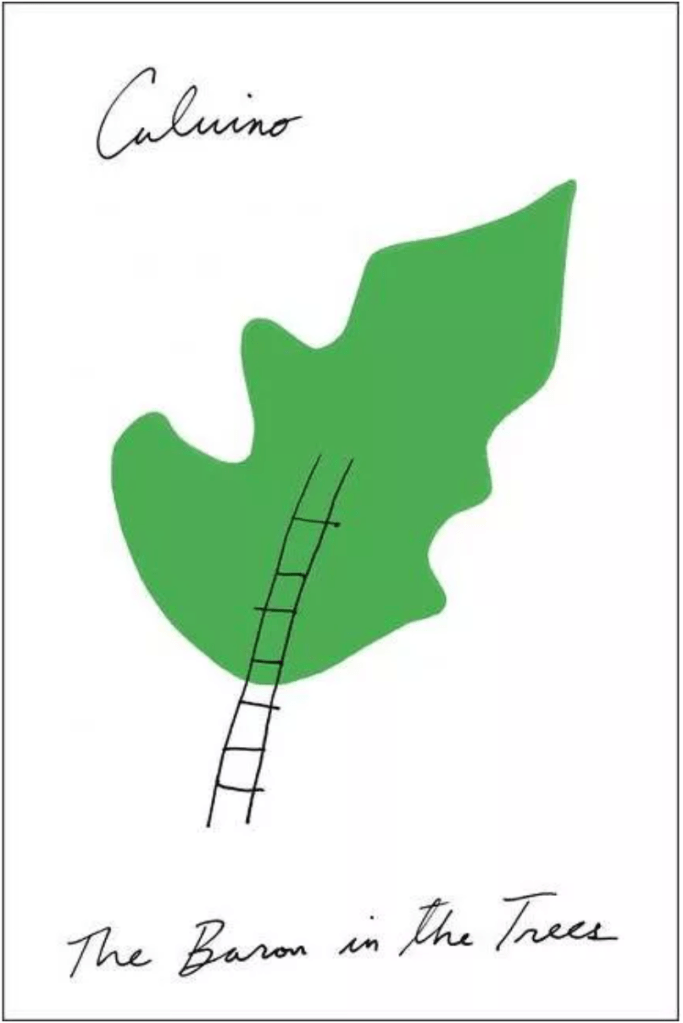
Now looking back, there seems to be a connection between the vibe of the bookstore and the kind of books I would purchase there. After failing to receive my order from Amazon, I purchased at the Book Culture on Columbus the first two volumes of In Search of Lost Time by Marcel Proust, translated by C. K. Scott Moncrieff. Upon seeing the white sheet and pillowcase on the cover the first volume, I was immediately brought back to the night at Combray when Marcel finds himself unable to fall asleep; and a glance upon the second volume, which came with Monet’s Hotel des Roches Noires in Trouville, would always invoke in me some vague memory from my visit to the Musée d’Orsay. The fiction section also contained a full collection of Italo Calvino, whose cover never failed to impress me–whether it was the lonely bird hovering above the Invisible Cities, or the lively shade of green surrounding The Baron in the Trees–the minimalism of which appeared in perfect synch with the bookstore’s interior design.
On a December day in 2019, I learned from a friend that the Book Culture on Columbus had permanently closed due to the raising rent. Shocked and sad, I looked for photos of the bookstore on my phone, hoping to recover some memories about the place, but realized that, as much as I enjoyed the bookstore, I had not taken a single photo of it. Since then, I had paid few visits to the neighborhood, and, even on days when I decided to get some drinks from the Starbucks next-door, I would find my gaze shunning the abandoned bookstore, lest I should catch glimpse of its decrepitude. Soon came the coronavirus, which forced Strand to close as well, leaving me with the fear that I might not be able to visit either bookstore by the time I leave NYC.
Time passes, and I was once again at the Starbucks earlier today. Unable to find an outdoor seat, I kept walking up Columbus Ave. and, as I passed where the Book Culture used to be, caught glimpse of something that caressed the strings of my mind–books! I stopped to examine the facade of the store more closely. First entering my visual field was a white-painted ‘The Strand’ against the scarlet frieze, which immediately elicited a vague excitement that in a few seconds would turn into an elucidated bliss as I saw the iconic red signs of the familiar bookstore, looming behind the glass window along with a dim reflection of the city streets, which suggested the veracity of the hypothesis that had been source of my excitement–the Book Culture has reopened as a new branch of the Strand!
 Yi's Blog