


2019 was the first whole year throughout which I have been systematically reading. Having set the somewhat optimistic goal (given I’m a slow reader) of reading 25 books at the beginning of the year, I finished 19 of them, the shortest of which took a week and the longest over four months. I wanted to share with you the five of them, ordered by time, that I drew most inspirations from and had most to say about.
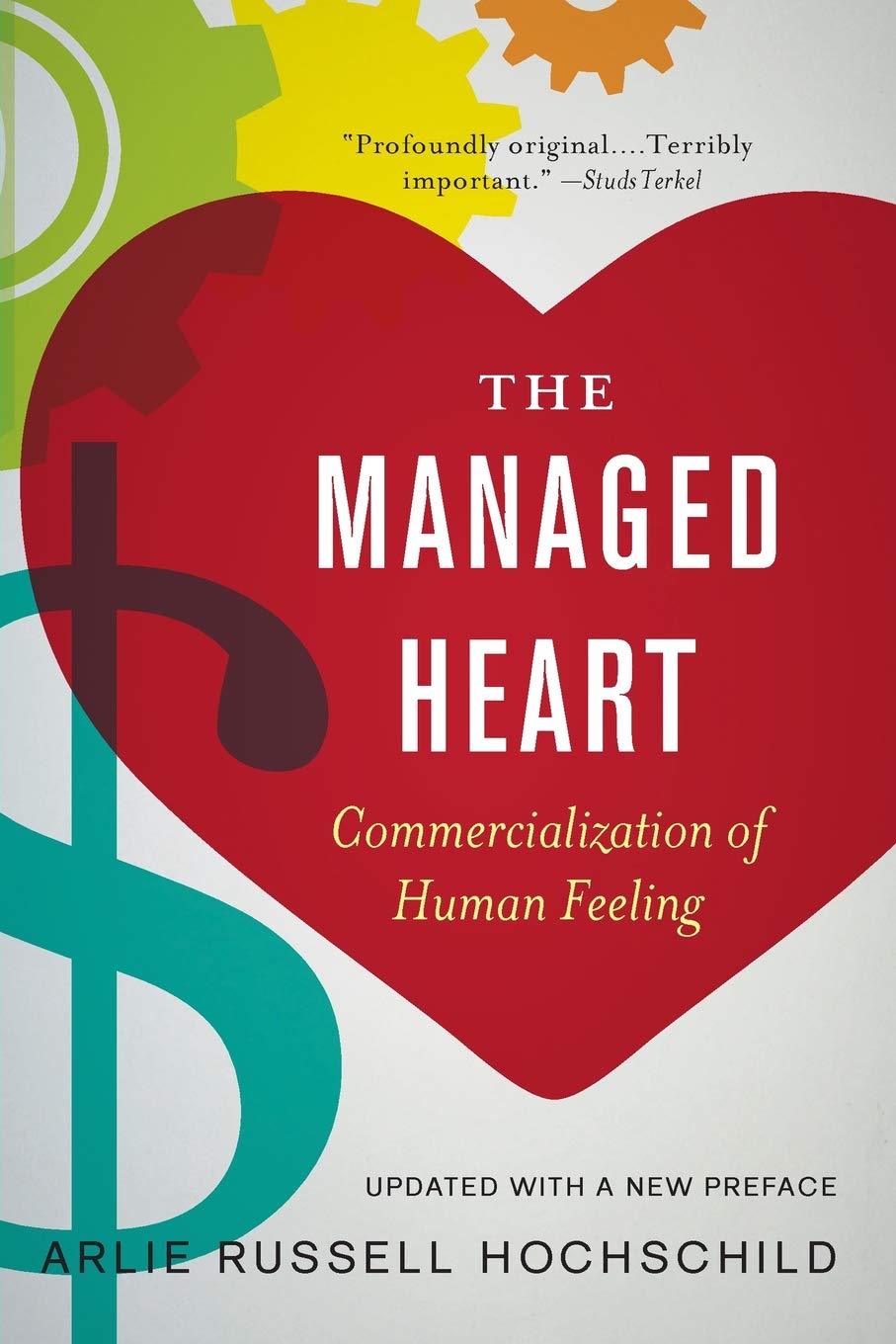
[Sociology] The Managed Heart: Commercialization of Human Feeling by Arlie Russell Hochschild
I learned about this book in an academic context. In Spring 2018, I was doing literature search on emotion and emotion regulation and saw Hochschild’s name in a citation to the idea that we regulate emotions to conform to social norms, which I immediately identified with, given my long-standing interest in the concept of the “right way to feel”. In The Managed Heart, Hochschild explored the concept of “emotion labor”, the idea that those in the service industry, especially females, are engaged in not only physical work, but emotional efforts as well, but this latter part has been largely ignored, both in terms of the compensation structure and the psychological burden it induces. Hochschild explored emotion labor through two case studies, featuring flight attendants and debt collectors, respectively. Whereas the former are trained to up-regulate positive affect and down-regulate negative ones in their service, the latter do the opposite, up-regulating the expression of anger to inflate their status in relation to the debtor. To explicate the sources and consequences of these emotion regulation processes, Hochschild cites the distinction drawn by Lionel Trilling between sincerity and authenticity. In short, sincerity prescribes how one should express their feelings, namely, to express them as they are; authenticity, however, requires that one feels the emotions that should be felt, emotions that are consistent with who one truly is. When the need for authenticity clashes with the feeling rules of the workplace, individuals, sensing a need to bridge their gap, are taxed with cognitive dissonance. As a result, individual workers are faced with a choice between assimilating their feelings, hence their identities, to their company’s standards, versus maintaining their selves at workplace through surface acting. The trouble is that the former leads to a burnout, and the latter a lack of motivation for work.
Hochschild’s take on the commercialization of feelings is arguably feminist, as she devotes two thirds of her case study to flight attendants, who at the time of her writing were almost exclusively female and attributed the problem of emotion labor in part to the asymmetric feeling rules our society held for male versus female (e.g. in the appropriateness of anger). Hochschild’s feminist approach, however, does not qualify her argument’s relevance to the broader audience beyond American airlines or the service industry more generally. Emotion labor has its philosophical roots. Insofar as one believes in the value of authenticity–for example, that ideally one should love what they do and do it not merely for the material compensations–how to feel at work is at stake for them, and expectations about the appropriate ways to feel remains a risk factor of psychological importance.
[Fiction] A Pale View of Hills and An Artist of the Floating World by Kazuo Ishiguro
The title implies the theme of the book—memory. Ishiguro is surprisingly insightful about the motivated nature of memory, that it is subject to (unconscious) distortions in line with one’s goals and concerns. Throughout the novel, Sachiko is intentionally portrayed as a bad mother—frequently ignoring her daughter’s needs and autonomy, yet claiming that she cares most about her. Meanwhile, the narrator (Etsuko) seems strangely tolerant of such attitudes. While she kept raising doubts about Sachiko’s intentions, she always ended up justifying them. This incongruence culminates at the end of the novel, as the reader realizes that Etsuko and Sachiko are the same person. This identity strikes me mostly because it reveals to me the malleable nature of memory. By individuating her old self—whose decision to emigrate to the UK indirectly led to her daughter’s depression and later suicide—Etsuko was able to temporarily step back from her guilt and reflect upon her past from a neutral point of view. Such an effort, however, ultimately failed as Sachiko’s memory gradually merged with her own.
Ishiguro further explores the relation between memory and implicit guilt in his second novel, An Artist of the Floating World. Ono, the protagonist, attributed the failure of his previous marriage negotiation for her daughter to the stigmas of his past—that as an artist, he contributed to Japan’s imperialist propaganda during the Second World War. Ishiguro, however, never made explicit whether it was the true reason behind the failure of the marriage negotiation. Instead, the confusion Ono’s wife and son expressed towards his confession during the current year’s negotiation suggests that the hostility Ono perceives might after all be his confabulation. What is truly hostile to Ono is his own conscience.
Aside from the psychological nature of the novel, An Artist also brings up interesting questions concerning the relationship between art and morality. For example, is Ono right in believing that an artist should in his work engage in sociopolitical causes, instead of pursuing pure beauty? More generally, to what extent can and should art play a public (and potentially political) role? A second line of questions concern the aesthetic and moral values of art—does the fact that an artwork is created through immoral means or that it prescribes morally questionable reactions qualify its aesthetic value (as Berys Gaut’s ethicism would argue)?
[Literary Criticism] Revolution of the Heart–A Genealogy of Love in China by Haiyan Lee
Revolution of the Heart is my favorite book of the year, and probably my favorite of all time, despite its esoteric language and occasional indulgence in quotation that makes it even harder to read. The book is a deconstruction of the concept of love, or qing (情) in Chinese literature from the 18th century to the late 1950s. The deconstruction of qing is characterized by three stages–or structures of feeling–the Confucian, the Enlightenment, and the Revolutionary. Under the Confucian structure of feeling, love and emotions more generally are regarded as legitimate only insofar as they are consistent with the Confucian morality of social relations. Under the Enlightenment structure of feeling, however, emotions become significant in their own right. Their legitimacy lies solely in their authenticity, and to live authentically is to pursue of one’s love despite pressures from one’s family and the norms of the society. Finally, the revolutionary structure of feeling is characterized by the integration of romantic love with patriotism and one’s commitment to class struggles. Qing‘s legitimacy once again relies upon external sources–in this case, one’s duty to their country and commitment to their social class. Romantic love merges into camaraderie love .
Having been reading and conducting research on emotion, the book brings to me an entirely distinct approach than that which scientists take to study emotions. Affective scientists, as their title (‘affect‘) suggests, focus on the physiological responses or appraisals that take place at the individual level, over the course of seconds, or perhaps minutes. Yet, I often found this approach somewhat insufficient in capturing how we actually think about emotions. Unlike psychologists, we tend to use the word to refer to experiences that last for weeks, years, or even decades (consider the love between a couple), which may also be shared at the collective level (e.g. nationalism), and which, importantly, map onto the things we care most deeply about–namely, what’s valuable to us and how to live a good life. The Revolution of the Heart, by examining emotions (in particular love) in their historico-sociological contexts, has well captured emotions’ conceptual richness as well as their ethical significance. Moreover, the deconstruction of love helps elucidate an ambiguity inherent in the word, in both English (love) and Chinese (爱, or 情). While the greek distinguishes between three types of love–philia, eros, and agapé, these boundaries between them get murky as these concepts are compressed into the single term love. Haiyan Lee, by showing how each aspect of love was construed and represented in literature throughout China’s contemporary history, has helped us appreciate the complexity of the term and emotion’s fascinating entanglement with psychology, philosophy, and society.
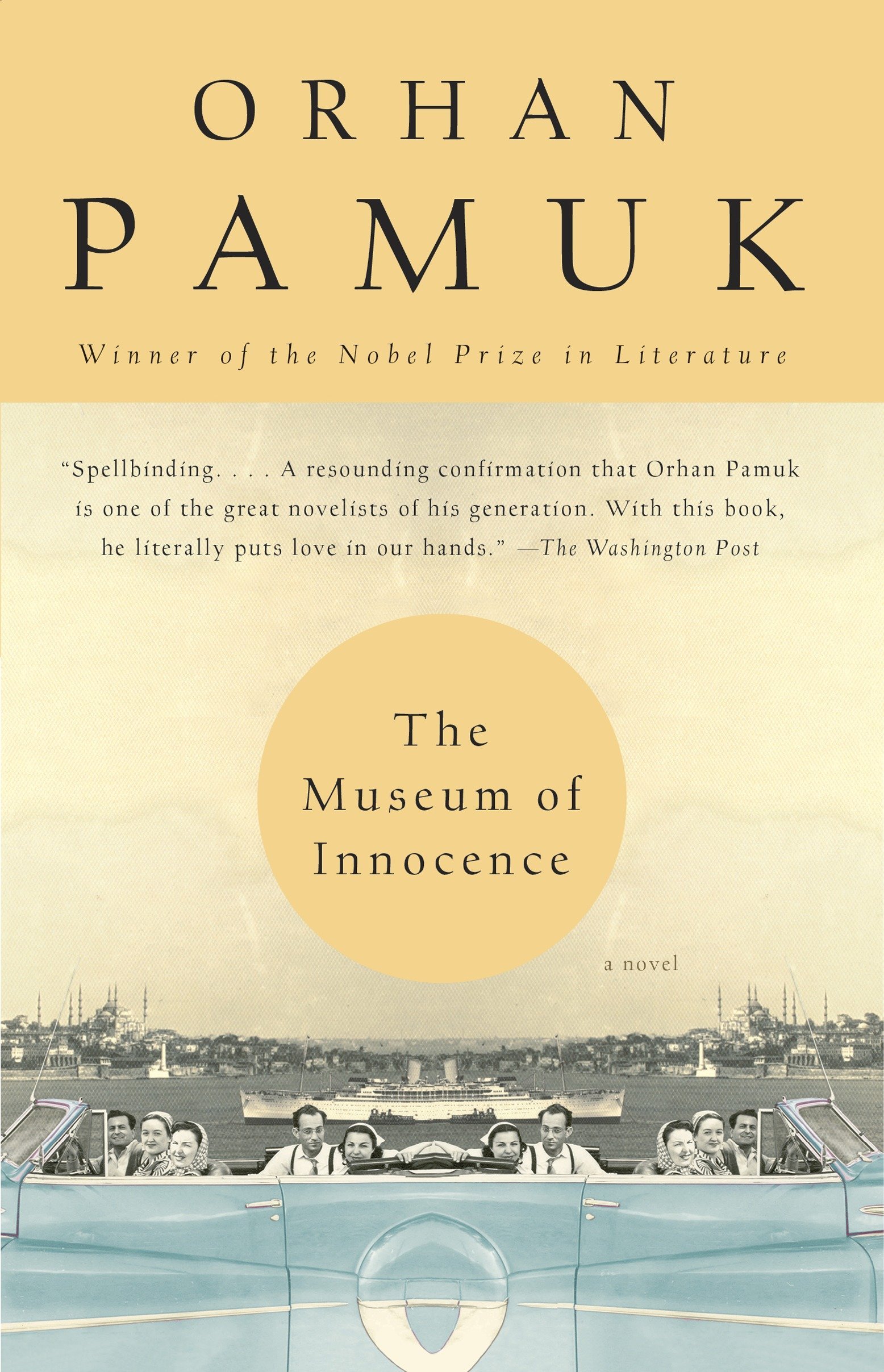
[Fiction] The Museum of Innocence by Orhan Pamuk
ΩA confusion dwelled in me as I read The Museum of Innocence: how exactly did Kemal fall in love with Fusun? The way they became entangled seemed at first glance no more than a hook-up (the uncanny nature of which in Turkey in the 1970s, of course, might have added to its romantic appeal). And given the passions that drive hook-ups are often short-lived, I was confused as to why Kemal’s love for Fusun would haunt him for eight years and ultimately transform into his obsession with collection. Essentially, what confused me is how can love of such depth and intensity arise from “mere” sex. While I don’t believe that love has nothing to do with sex, I doubt sex alone is ever sufficient. Love as an emotion, has an intentional structure that is beyond the scope of the bodily arousals that constitute sex. Moreover, how should I make sense of the speed at which love developed between Kemal and Fusun? After all, it took no more than a week or two for them to fall desperately in love, a transformation which, according to the author, was facilitated merely by incessant love-making.
These thoughts reminded me of Marquez’s Love in the time of Cholera. While reading it, I kept wondering how Florentino and Fermina fell in love through mere correspondence and occasional eye contacts and how that intense but short-lived passion ended up surviving in Florentino for over five decades. In a sense, Museum and Cholera have explored two antithetical forms of love–while love in the latter is glorified by its independence from sexual fantasies, love portrayed by the former arises precisely from sex and seems to consist of both a physical and a transcendental aspect.
Underlying these confusions are narratives that have challenged certain assumptions I held about love. Perhaps one of the assumptions was the following: that love is valuable only insofar as it is transcendental. In other words, love qua physical sensations (e.g. sexual desires) are not worth celebrating unless it reflects values that transcend the immediate need of the self–e.g. the individuality and autonomy implicated in the lovers’ resistance of a repressive social order (cf. The Revolution of the Heart). The Museum of Innocence challenged these assumptions. Pamuk portrayed Kemal in such a way that there is no reason for him to love Fusun, not just in the sense that their relationship was at odds with the societal norms of rationality, but also because Kemal’s fascination with Fusun seemed to be grounded in the mere gratification of sexual desires. Therefore, the book can be seen as Pamuk’s attempt to bring forth a love that deviates from the ideal by portraying a protagonist that is out of the ordinary (whose love ultimately transformed into a fetishism for collection). As I tried to make sense of the Kemal’s feelings and motivations, I was driven to entertain a new concept of love that was utterly different from the canonical narrative of my society. Ultimately, this allowed me to simulate a way of living that is different from my own. In this sense, fictions indeed extends our lives by teaching us to imagine, to empathize, and most importantly, to re-evaluate the beliefs and assumptions we come to hold for granted.
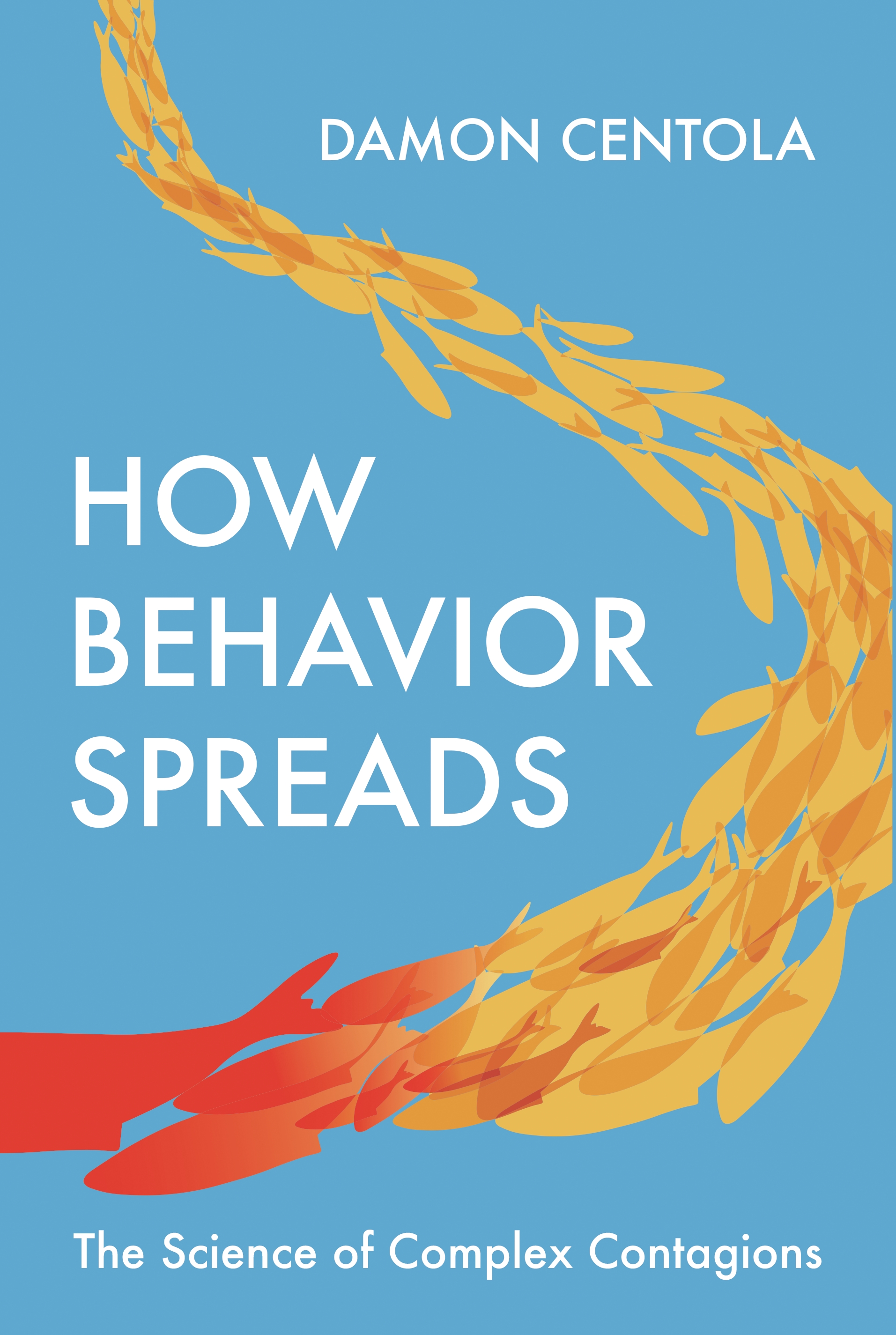
[Sociology] How Behavior Spreads by Damon Centola
A central question How Behavior Spreads examines is: why do innovations and health behaviors often fail to spread as viruses do? Centola argues that the spread of behaviors ultimately depends on two sets of factors: the type of contagion the behavior involves, and the structure of the network in which they propagate. While simple contagion like the transmission of the flu requires single contact to pass from one person to another, innovative behaviors and health information are complex contagions, whose transmission requires reinforcement from multiple agents. While simple contagions propagate fast in small world networks, where the average degree of connection among their members is small, complex contagions spread most effectively in clustered networks, in which most members are connected with their local communities, say family and friends, but not distant strangers. Ultimately, based on these insights, we can begin designing interventions that facilitate the propagation of information and desirable behaviors across various situations, whether to reduce polarization on social media, or to facilitating the coordination among different departments of an organization.
I did not expect, though, that this book’s real-life relevance would be manifested so soon, in the unfortunate outbreak of the 2019 novel coronavirus. Social media platforms like WeChat no doubt have contributed to the propagation of health information and prosocial campaigns in support of people in Wuhan. In a sense, the spread of prosociality, which often takes the form of complex contagion, can be interpreted precisely as a result of the clustered nature of WeChat. At the same time, however, the same mechanisms have allowed misinformation to propagate, in an arguably more vehement manner. After all, research has suggested that we are more likely to heed to and share information that elicits emotions and uncertainty. A challenge we are facing in the coronavirus outbreak, and arguably in the digital age more generally, then, is to facilitate the spread of veridical information and prosocial, rational behavior, while suppressing their inaccurate and irrational counterparts. I believe this could be partly addressed by the government. Insofar as the officials and mainstream media are perceived as trustworthy, their announcement should play a greater role than misinformation in shaping the collective beliefs across the social network.
My full book list for 2019
The Managed Heart by Arlie Russell Hochschild
A Portrait of the Artist as a Young Man by James Joyce
Passions within Reasons by Robert Frank
The Baron in the Trees by Italo Calvino
A Pale View of Hills by Kazuo Ishiguro
An Artist of the Floating World by Kazuo Ishiguro
Stories of Your Life and Others by Ted Chiang
Revolution of the Heart by Haiyan Lee
The Museum of Innocence by Orhan Pamuk
The Unbearable Lightness of Being by Milan Kundera
The War for Kindness by Jamil Zaki
The Fall of Public Man by Richard Sennett
At the Existentialist Café by Sarah Bakewell
Invisible Cities by Italo Calvino
The Ethics of Authenticity by Charles Taylor
Looking for Spinoza by Antonio Damasio
Identity: The Demand for Dignity and the Politics of Resentment by Francis Fukuyama
How Behavior Spreads by Damon Centola
Reductionism in Art and Brain Science by Eric Kandel
 Yi's Blog